
You wake up with itchy red bumps on your skin. Your first thought might be mosquitoes, but something feels different. The bites are clustered together, maybe in a line, and they won’t stop itching. Could these be bed bug bites instead?
Understanding the difference between bed bug bites and mosquito bites is crucial for Dayton residents. While mosquitoes are a summer nuisance, bed bugs are a year-round problem that requires immediate professional treatment. After 15 years of helping Dayton families deal with pest problems, we’ve seen plenty of both, and we’re here to help you identify bed bug bites vs mosquito bites what’s biting you.
Why Correct Identification Matters
Knowing whether you’re dealing with bed bugs or mosquitoes isn’t just about satisfying curiosity, it determines your next steps. Mosquito bites require simple remedies like anti-itch cream and better outdoor protection. Bed bug bites signal an infestation in your home that needs professional extermination.
Delaying bed bug treatment because you mistook the bites for mosquito bites can allow the infestation to spread throughout your home, making treatment more difficult and expensive. Let’s make sure you know exactly what you’re dealing with.
Appearance: The First Clue
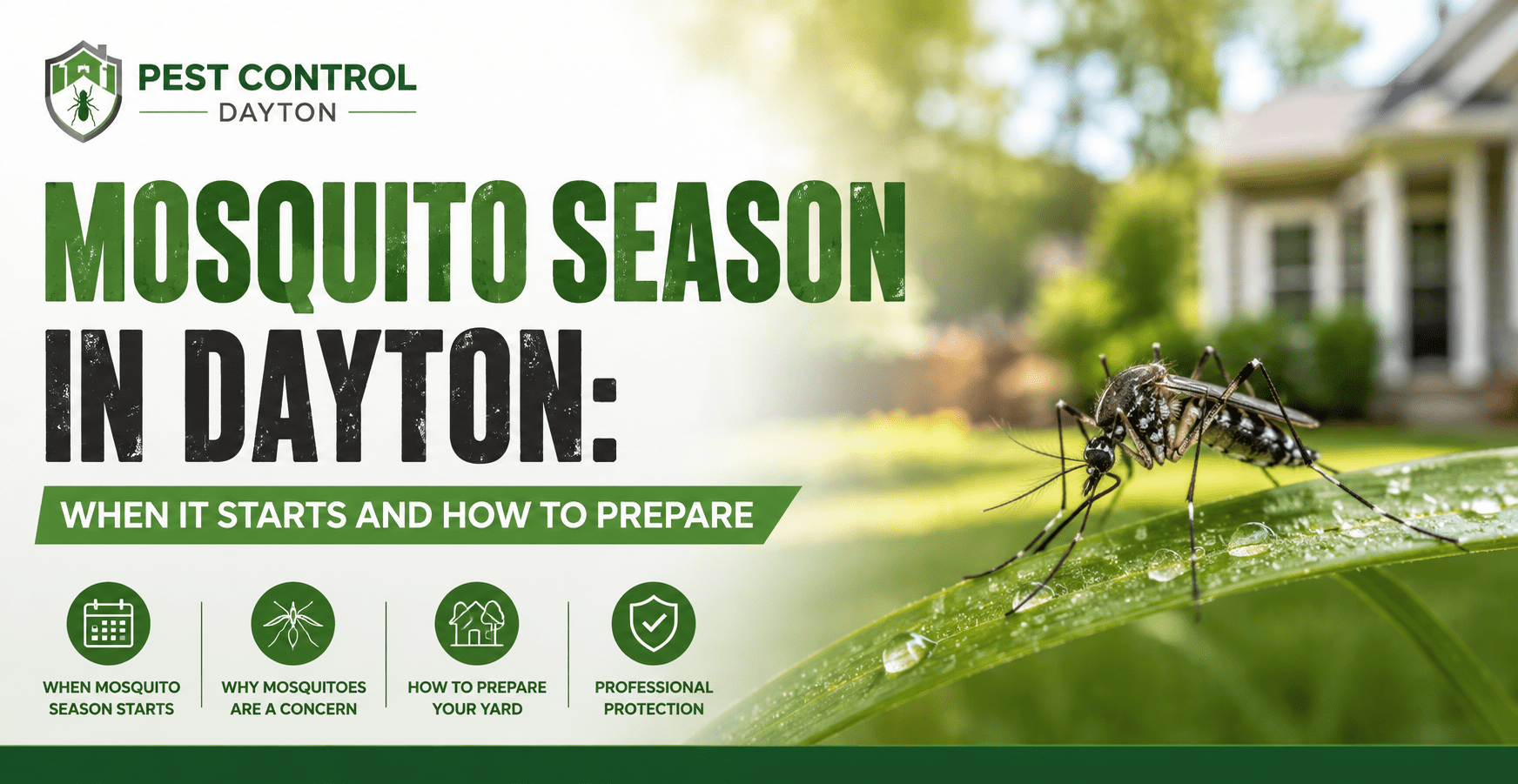
Mosquito bites appear as puffy, white bumps that turn reddish-pink shortly after being bitten. They’re usually round or slightly irregular in shape with a small puncture mark in the center. The raised bump is caused by an allergic reaction to mosquito saliva. These bites typically appear within minutes to hours after being bitten.
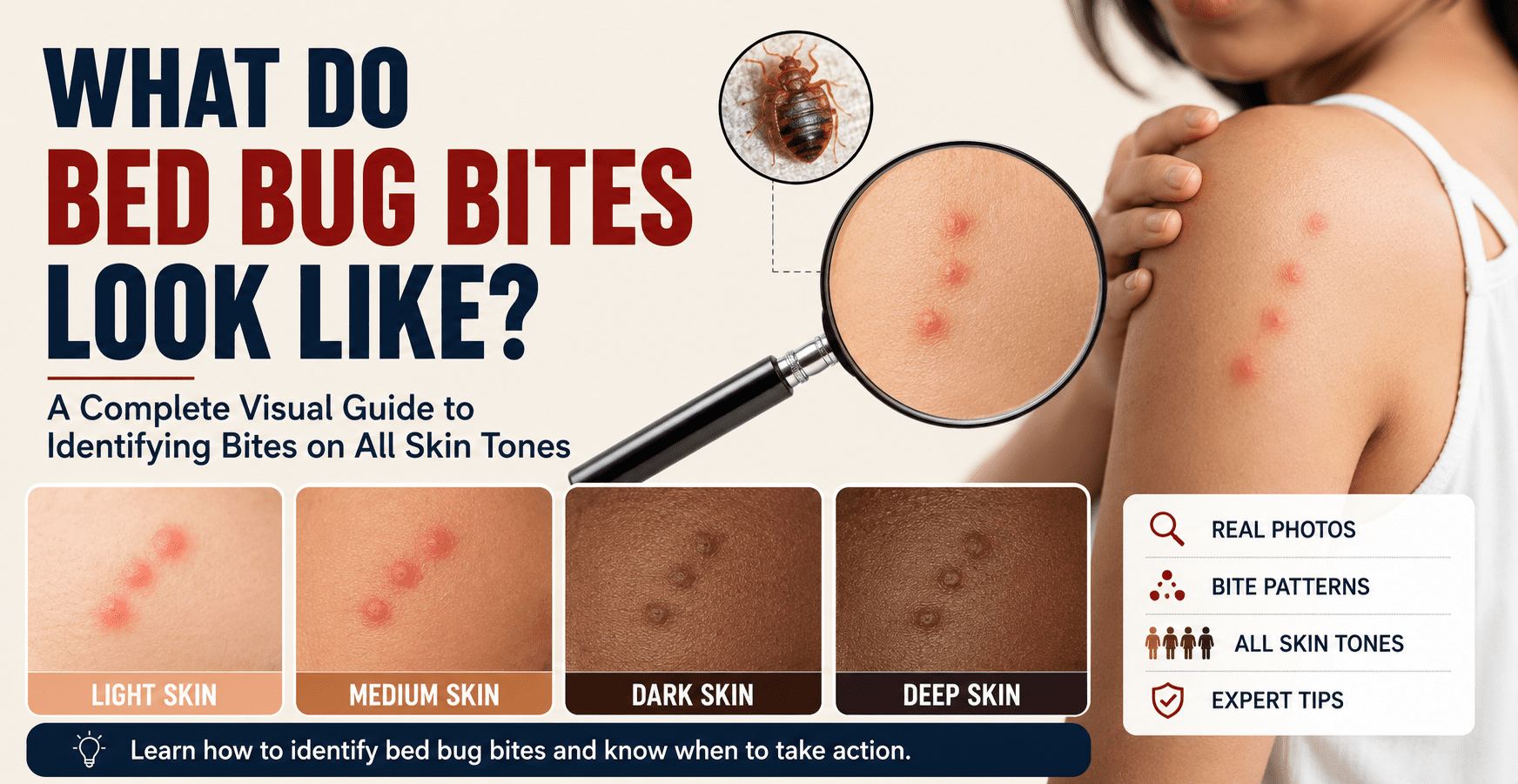
Bed bug bites appear as small, flat or raised red welts. They’re often smaller and less swollen than mosquito bites initially, though they can develop into larger welts over time. The bites typically develop several hours to days after the actual bite occurred. Some people develop a more severe reaction with larger, extremely itchy welts, while others show little to no reaction at all.
Pattern and Location: Where You’re Bitten
This is often the most telling difference.
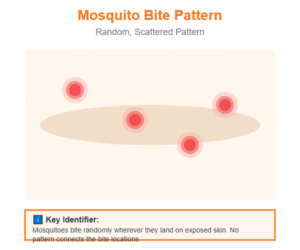
Mosquito bites appear randomly on exposed skin, wherever a mosquito happened to land. You might have one on your ankle, another on your forearm, and one on your neck, with no pattern connecting them. Mosquitoes bite uncovered skin areas that were accessible when you were outdoors or near an open window.
Bed bug bites typically appear in clusters, lines, or zigzag patterns, often called the “breakfast, lunch, and dinner” pattern. This happens because bed bugs often feed multiple times as they move across your skin. The bites usually appear on areas exposed while sleeping: arms, shoulders, neck, face, hands, and legs. They can also bite through thin fabrics like pajamas.
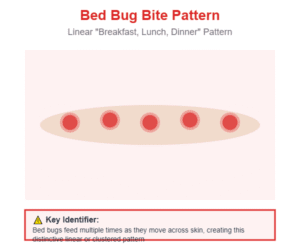
If you notice bites arranged in a line or grouped together in small clusters, bed bugs are the more likely culprit. If bites are scattered randomly with no pattern, mosquitoes are the probable cause.
Timing: When You Get Bitten
Mosquitoes are active at dawn and dusk, though some species bite during the day. You’ll typically notice mosquito bites shortly after spending time outdoors, especially near standing water, during warmer months from late spring through early fall in Dayton.
Bed bugs feed at night, typically in the hours before dawn when you’re in your deepest sleep. You won’t feel the bite occurring, bed bugs inject an anesthetic along with their saliva. You’ll wake up with new bites that weren’t there when you went to bed. Bed bugs are active year-round, unaffected by Dayton’s seasons since they live indoors.
Symptoms and Reactions
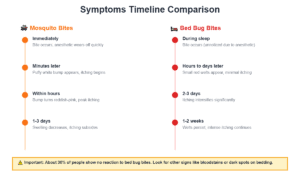
Mosquito bites start itching almost immediately and can be quite uncomfortable for a few hours to a few days. The swelling typically goes down within a day or two. In rare cases, people can have more severe allergic reactions, but for most people, mosquito bites are just a temporary annoyance.
Bed bug bites may not itch initially, but the itching intensifies over several days. The welts can last a week or longer, and the intense itching can lead to scratching that causes secondary infections. Some people experience severe allergic reactions, anxiety, and sleep disturbances. About 30% of people show no reaction to bed bug bites at all, making detection even more difficult.
Other Signs to Look For
Bites alone don’t tell the whole story. Look for these additional clues:
If it’s mosquitoes:
- You hear buzzing near your ears
- Bites appeared after being outdoors
- Others in your household who were outside have similar bites
- It’s warm weather
- No other unusual signs in your home
If it’s bed bugs:
- Small bloodstains on sheets (crushed bed bugs after feeding)
- Tiny dark spots on mattresses or nearby furniture (bed bug droppings)
- A sweet, musty odor in the bedroom
- Shed bed bug skins near the mattress
- Actual bugs hiding in mattress seams, headboards, or furniture cracks
- Only people who sleep in certain beds have bites
Similar Conditions to Rule Out
Sometimes what looks like insect bites might be something else entirely:
- Flea bites: Typically concentrated on lower legs and ankles, smaller than mosquito bites
- Spider bites: Usually individual, not in patterns, may have two puncture marks
- Hives or allergic reactions: Can appear as welts but aren’t localized to specific body parts
- Scabies: Intensely itchy rash, often between fingers, on wrists, or in skin folds
- Dermatitis: Skin irritation that may resemble bite patterns
What to Do for Each Type of Bite

For mosquito bites:
- Wash the area with soap and water
- Apply ice to reduce swelling
- Use anti-itch cream or calamine lotion
- Take an antihistamine if itching is severe
- Avoid scratching to prevent infection
- Prevent future bites with repellent and protective clothing
For bed bug bites:
- Wash bites with soap and water
- Apply anti-itch cream
- Take antihistamines for severe itching
- Avoid scratching
- Contact a pest control professional immediately
This last point is critical, treating the bites won’t solve your bed bug problem.
The Inspection: Confirming Bed Bugs
If you suspect bed bugs, conduct a thorough inspection:
- Strip your bed completely and examine all seams, folds, and tags on the mattress and box spring
- Check the bed frame, headboard, and nearby furniture
- Look behind picture frames, inside outlets, and along baseboards
- Use a flashlight and magnifying glass
- Look for live bugs (apple seed-sized, reddish-brown), eggs (tiny white ovals), shed skins, and dark fecal spots
Bed bugs are expert hiders, so you might not see them even if they’re present.
When to Call a Professional
If you’re seeing consistent new bites appearing after sleeping, finding evidence of bed bugs, or can’t determine the source of your bites, it’s time to call in the experts.
At Pest Control Dayton, we’ve been helping local families identify and eliminate bed bugs for 15 years. We use safe, effective treatments that thoroughly eliminate bed bugs at all life stages. Our team understands the stress and embarrassment that bed bugs can cause, and we handle every situation with professionalism and discretion.
We also offer same-day service for urgent situations because we know how quickly bed bug anxiety can escalate.
Prevention Is Key
To avoid mosquito bites:
- Use EPA-registered insect repellents
- Wear long sleeves and pants during peak mosquito hours
- Eliminate standing water around your property
- Install or repair window screens
- Use fans outdoors—mosquitoes are weak fliers
To prevent bed bugs:
- Inspect secondhand furniture before bringing it home
- Use protective mattress encasements
- Check hotel rooms when traveling
- Keep luggage off the floor and bed
- Vacuum regularly
- Reduce clutter where bed bugs can hide
Still not sure what’s biting you?
Don’t spend another sleepless night worrying. Contact Pest Control Dayton at hello@pestcontroldayton.org or give us a call. We’ll help you identify the problem and provide effective, safe solutions. As your local Dayton neighbors with 15 years of experience, we’re committed to helping you achieve a pest-free home and peace of mind.