If you’ve ever flipped on the bathroom light at 2 a.m. and spotted one of those long, fast-moving creatures skittering across the floor, you already know how unsettling house centipedes can be. The good news? You’re not alone, and more importantly, there are proven ways to get rid of them.
This guide covers everything you need to know, from why they showed up in the first place to how to kick them out for good.
What Is a House Centipede?
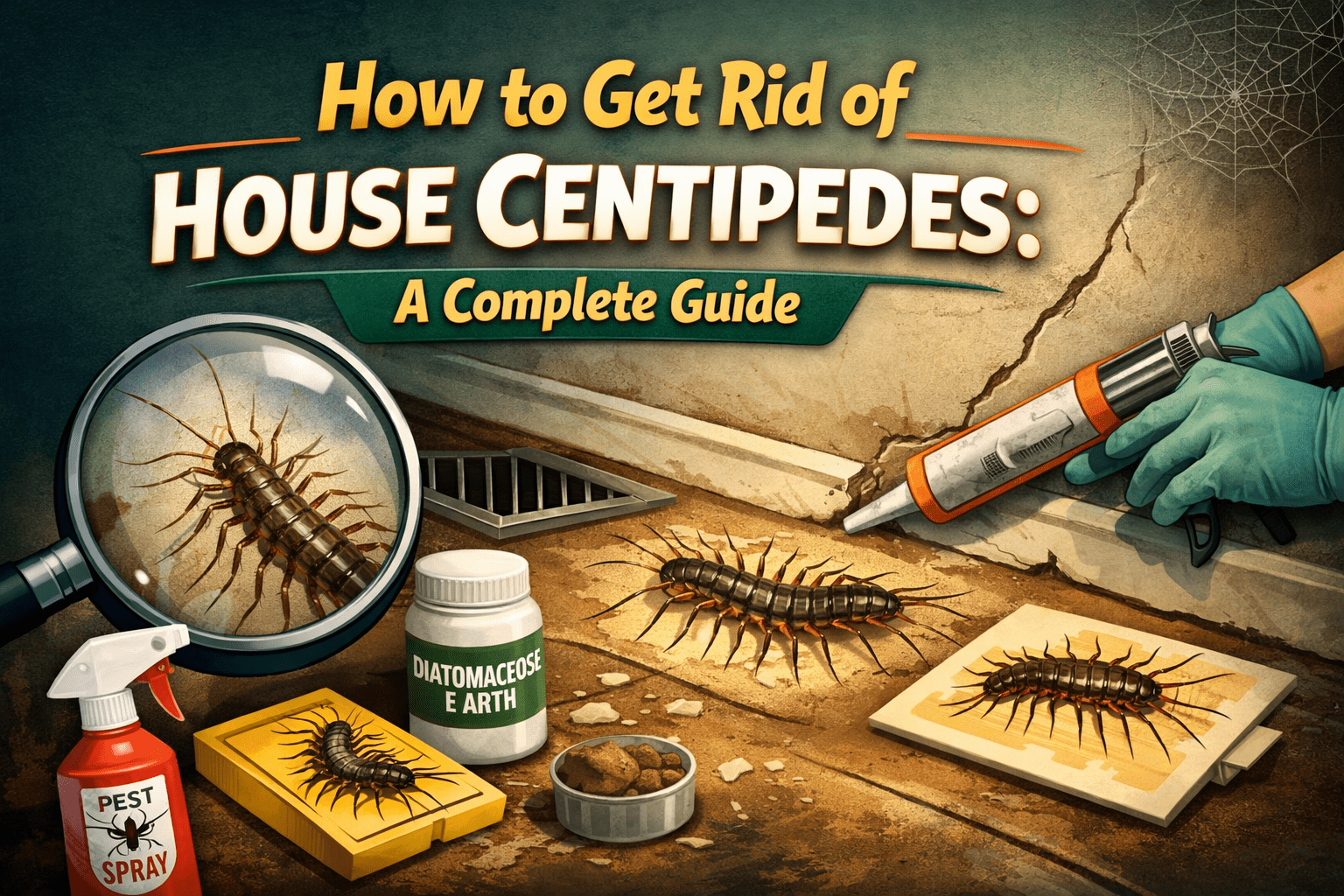
The house centipede (Scutigera coleoptrata) is a yellowish-gray insect with up to 15 pairs of long, banded legs. They move fast, prefer dark and damp spaces, and honestly look a lot scarier than they actually are.
Unlike outdoor centipedes, these guys live entirely indoors. They’re most commonly found in:
- Bathrooms and laundry rooms
- Basements and crawl spaces
- Closets and garage areas
- Under sinks and behind appliances
They’re active mostly at night, which is why that late-night sighting is such a classic homeowner experience.
Are House Centipedes Dangerous?
This is one of the most common questions homeowners ask, and it deserves a straight answer.
House centipedes are not dangerous to humans in any serious way. They can technically bite if handled, but it’s rare, and the reaction is usually no worse than a mild bee sting. They are not venomous in any way that poses a medical threat to healthy adults or children.
What they are, though, is a sign. Seeing centipedes regularly inside a home typically means there’s a moisture problem, a clutter issue, or another pest population already present serving as their food source.
Why Do House Centipedes Show Up Indoors?
Before fixing the problem, it helps to understand what’s attracting them. In most cases, it comes down to three things:
Moisture. Centipedes love humidity. A damp basement, a leaky pipe under the sink, or poor bathroom ventilation creates the perfect environment for them.
Food. House centipedes eat other insects, including cockroaches, silverfish, spiders, and ants. If centipedes are present, there’s almost certainly another pest issue feeding them.
Entry points. Gaps around pipes, cracks in the foundation, and unscreened vents are open doors for centipedes to walk right in.
How to Get Rid of House Centipedes: Step by Step
Step 1: Reduce Moisture Throughout the Home
This is the single most effective long-term fix. Here’s what to do:
- Run a dehumidifier in the basement or crawl space
- Fix leaky faucets and pipes right away
- Use exhaust fans in bathrooms during and after showers
- Make sure the dryer vent exhausts fully outside
- Check that gutters drain water away from the foundation
Step 2: Eliminate Their Food Source
If centipedes have nothing to eat, they won’t stick around. Addressing other pest issues inside the home, especially silverfish, cockroaches, and spiders, removes the reason centipedes are there in the first place. A general interior pest treatment from a licensed professional handles this efficiently.
Step 3: Seal Entry Points
Walking around the exterior of the home and looking for the following is a simple but highly effective step:
- Cracks in the foundation
- Gaps around water pipes or utility lines
- Poorly sealed window frames and door thresholds
- Damaged screens on basement vents
Caulk or expanding foam seals these entry points quickly and makes a real difference in keeping centipedes out.
Step 4: Declutter and Clean Strategically
Centipedes hide in undisturbed areas. Piles of boxes in the basement, stacks of cardboard in the garage, or cluttered closets give them shelter. Clearing out that clutter takes away one of their favorite hiding spots.
Step 5: Apply Targeted Treatments
Several products work well for centipede control:
- Diatomaceous earth sprinkled along baseboards and in wall voids damages their exoskeleton and kills them naturally
- Sticky glue traps placed along walls help monitor and reduce the population
- Residual insecticide sprays applied around the perimeter, both inside and outside, create a barrier centipedes won’t cross
For serious infestations, a professional treatment using professional-grade products will be far more effective than anything available at a hardware store.
Step 6: Treat the Perimeter Outside
Many homeowners forget that centipede control starts outside. Applying a perimeter spray around the base of the home’s exterior, focusing on mulch beds, woodpiles, and areas where moisture collects, stops them before they even make it inside.
Natural Remedies That Actually Help
For those who prefer a more natural approach, a few options can complement the overall strategy:
- Peppermint oil diluted in water and sprayed along baseboards acts as a mild deterrent
- Cedar mulch near the home’s foundation is less attractive to insects than standard wood mulch
- Keeping the home well-ventilated reduces humidity naturally without any chemicals
These methods work best as prevention and support, not as stand-alone solutions for an active infestation.
How Long Does It Take to Get Rid of House Centipedes?
With consistent effort, most homeowners see a significant reduction within two to four weeks. A professional treatment typically shows results much faster, often within a few days of the initial visit.
Frequently Asked Questions
Does killing a house centipede attract more?
No. This is a common myth. Killing one centipede does not release a pheromone that draws others in. However, leaving dead insects around can attract other pests, so cleaning up afterward is still a good habit.
Can house centipedes infest a clean home?
Yes. Cleanliness helps, but moisture is the bigger factor. Even a spotless bathroom with poor ventilation can become centipede territory.
What time of year are house centipedes most active?
They’re active year-round indoors, but more activity is often noticed in the fall when they move inside to escape cooler temperatures.
Do centipedes come up through drains?
They can enter through floor drains in basements, though this is less common. Keeping drain covers in place helps prevent this.
Should there be concern after spotting one centipede?
One sighting is not an emergency. Seeing them regularly, especially during daylight hours, suggests a larger population and warrants a closer look.
Time to Take Back the Home
House centipedes are manageable, but doing it right takes a combination of moisture control, sealing entry points, eliminating their food source, and targeted treatment. When the DIY route hasn’t delivered lasting results, and centipedes keep coming back, that’s a clear signal that the underlying issue needs professional attention.
Pest Control Dayton specializes in exactly these kinds of situations. Whether it’s one centipede or dozens, a thorough home assessment, root cause identification, and a treatment plan that actually works can make all the difference.
Don’t let centipedes make themselves comfortable indoors. Visit us today to schedule a free inspection and get the problem handled the right way. We also provide services like bed bug treatment, rodent control in Dayton, and termite control to help protect your home from a wide range of pest issues.