If you’ve never dealt with termites before, consider yourself lucky. These tiny insects are responsible for billions of dollars in property damage across the United States every single year, and the scary part? Most homeowners don’t even know they have a problem until serious damage has already been done.
Living in Dayton, Ohio, puts your home in a region where termite activity is very real, particularly subterranean termites, which thrive in our soil and love the moisture of Ohio’s climate. So if you’re wondering whether those odd little signs around your home are something to worry about, this guide is for you.
Let’s break down exactly what to look for, why it matters, and what you should do if you find it.
Why Termites Are Such a Big Deal in Dayton
Dayton’s mix of humid summers and wet springs creates the perfect environment for termite colonies to grow and spread. Subterranean termites, the most destructive species in Ohio, build their colonies underground and travel up into your home’s wood structure through mud tubes they construct themselves.
The problem is they work silently. They don’t announce themselves. By the time you notice visible damage, a colony may have been eating through your home’s structural wood for months or even years.
That’s why knowing the early warning signs is so important.
7 Signs of Termites in Your Dayton Home
1. Mud Tubes Along Your Foundation
This is one of the most reliable signs of subterranean termite activity. These tubes look like thin trails of dried mud running along your foundation walls, crawl space, or basement. They’re about the width of a pencil and serve as protective tunnels that keep termites moist as they travel between the soil and your home’s wood.
If you spot these, don’t ignore them.
2. Hollow-Sounding Wood
Knock on wooden surfaces around your home, such as baseboards, door frames, window sills, and structural beams. If the wood sounds hollow or papery instead of solid, termites may have been eating through it from the inside out. They consume wood along the grain, leaving a thin shell on the outside while hollowing out everything underneath.
3. Discarded Wings Near Windows and Doors
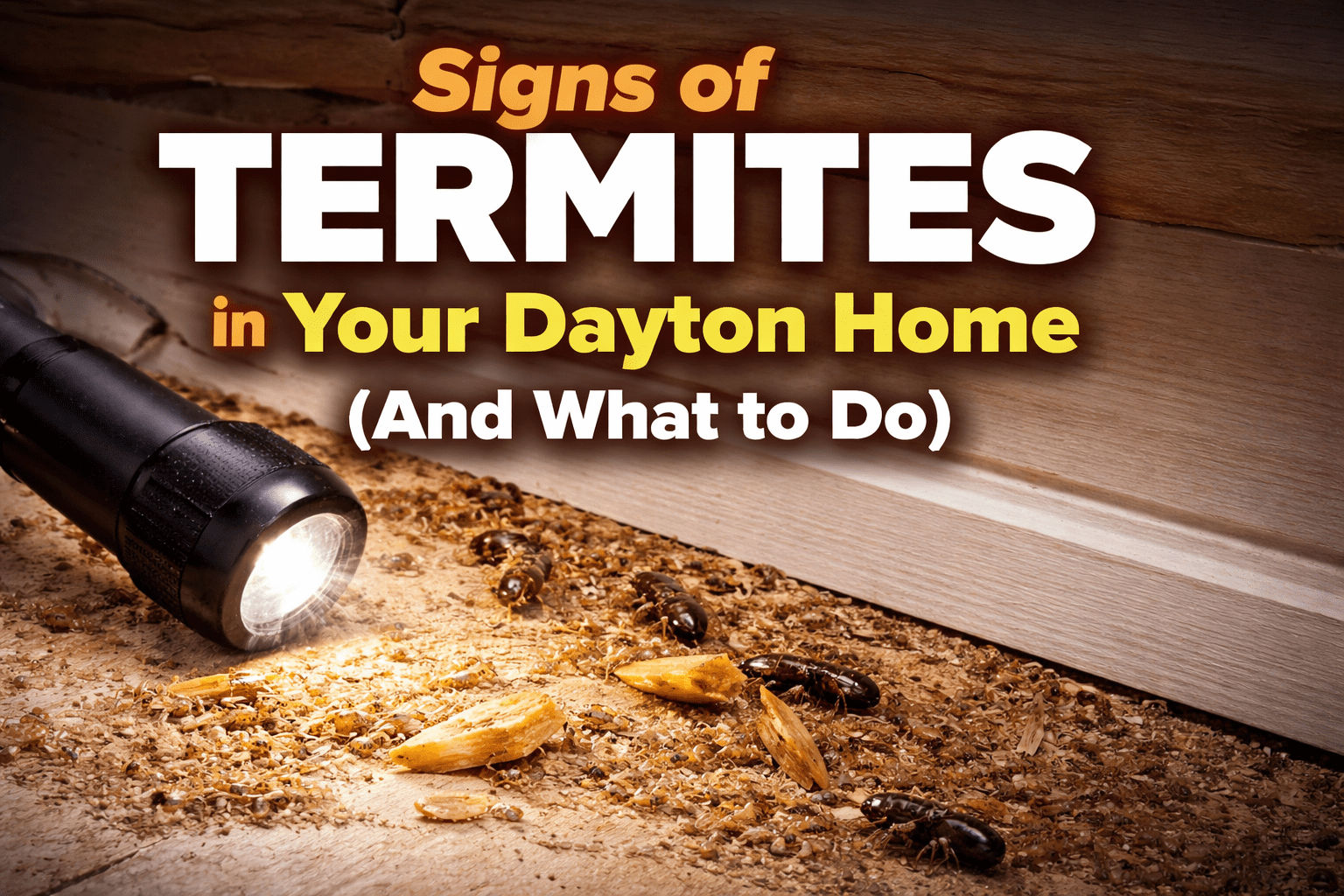
Every spring, termite swarmers (the reproductive members of a colony) take flight to start new colonies. After they land, they shed their wings. Finding small piles of translucent wings near windowsills, doorways, or light fixtures is a classic sign that a termite swarm has occurred nearby, possibly inside your home.
4. Tight-Fitting Doors and Windows
This one surprises a lot of homeowners. If your doors or windows have suddenly started sticking or become harder to open and close, termites could be the reason. As they eat through wood and produce moisture, the wood can warp and swell, causing that tight fit you’re noticing.
5. Frass (Termite Droppings)
Drywood termites leave behind small, wood colored droppings called frass. These look like tiny pellets or sawdust and often pile up near wooden furniture, baseboards, or walls. If you’re seeing what looks like fine sawdust in spots where you haven’t done any drilling or sanding, it’s worth investigating.
6. Bubbling or Uneven Paint
Termite activity beneath your walls creates moisture, and that moisture has to go somewhere. Often it pushes up against your paint or drywall, causing it to bubble, crack, or peel in ways that look a lot like water damage. If you’re seeing this without any obvious plumbing issue, termites are worth considering.
7. Visible Termite Swarmers
If you actually see flying insects inside your home during spring, pay close attention. Termite swarmers look similar to flying ants but have straight antennae, equal-length wings, and a thick waist. Seeing them indoors is a strong indicator that a colony is already established somewhere in or around your home.
Also read: Is That a Termite or Flying Ant? How to Tell the Difference
What To Do If You Spot These Signs
Step 1: Don’t panic, but don’t wait either.
Termites don’t go away on their own. The longer you wait, the more damage they cause.
Step 2: Avoid disturbing the area.
If you find mud tubes or damaged wood, resist the urge to start pulling things apart. Disturbing the colony can cause them to scatter deeper into your home, making treatment harder.
Step 3: Document what you found.
Take photos of the mud tubes, damaged wood, frass, or wings. Note where in the house you found each sign. This helps a pest control professional assess the situation faster and more accurately.
Step 4: Call a licensed termite professional.
DIY termite treatments rarely work. The products available to consumers are not strong enough to eliminate an established colony, and without knowing where the colony is centered, you’re essentially guessing. A licensed professional will inspect your entire property, identify the species, locate the colony, and recommend the right treatment plan.
How Do Professionals Treat Termites?
Depending on the type of termite and the severity of the infestation, treatment options typically include:
- Liquid soil treatments: A liquid termiticide is applied around the foundation, creating a chemical barrier that kills termites as they travel through the soil
- Bait systems: Stations are placed around the property to attract termites and deliver a slow acting agent back to the colony, eliminating it over time
- Wood treatments: Direct application to affected wood to kill active termites and protect against future activity
- Fumigation: Used in severe drywood termite infestations, though less common in Ohio
A reputable pest control company will explain your options clearly and honestly, without pushing you toward the most expensive solution.
Also read: Pest Control Cost in Dayton, Ohio: What to Expect
Frequently Asked Questions About Termites in Dayton, OH
How do I know if I have termites or ants?
The easiest way to tell them apart is by looking at the wings and body. Termites have straight antennae, equal length wings, and a broad waist. Ants have bent antennae, unequal wings, and a pinched waist.
How fast can termites damage a home?
A mature colony of several hundred thousand termites can cause significant structural damage within a few years. Smaller colonies cause damage more slowly, but no infestation should be left untreated.
Are termites covered by homeowner’s insurance?
In most cases, no. Standard homeowner’s insurance policies typically exclude termite damage because it’s considered a preventable issue. This makes early detection and professional treatment even more important.
What time of year are termites most active in Ohio?
Termite swarms in Ohio most commonly occur in spring, between March and May, when temperatures warm up and colonies send out swarmers. However, termites can be active inside heated homes throughout the entire year.
Can I treat termites myself?
You can try, but it’s rarely effective for an established infestation. Store-bought products typically kill only the termites they come into direct contact with, leaving the colony intact. Professional treatments are designed to reach the colony and eliminate it at the source.
Protect Your Dayton Home Before It’s Too Late
Termites are not something you want to play a waiting game with. If any of the signs above sound familiar, even one of them, it’s time to get a professional set of eyes on your property.
At Pest Control Dayton, we help Dayton homeowners identify, treat, and prevent termite infestations including bed bugs and rodent control with proven methods, transparent pricing, and zero pressure. Our licensed Ohio technicians know exactly how termites behave in this region and exactly how to stop them.
Don’t let termites quietly eat away at the home you’ve worked hard to build.
Pest Control Dayton to schedule your free termite inspection today. Same day appointments are available, and our team is ready to help you take back your home.