
Noticing tiny dark pellets around your home? You’re not imagining things, you may be looking at mouse droppings, one of the earliest and clearest signs of a rodent problem. At Pest Control Dayton, we’ve helped thousands of local families and businesses identify mouse activity long before it turned into structural damage, contamination, or a full-blown infestation.
Mouse droppings are easy to overlook, especially in dim or hidden areas. But once you know what they look like, it becomes much easier to pinpoint where mice are traveling, feeding, nesting, or entering your home. This guide breaks everything down in simple, practical terms, with insights drawn from years of real rodent control work across the Dayton area.
The Basics: What Mouse Droppings Look Like
Mouse droppings are typically the size and shape of dark grains of rice. A single dropping generally measures:
- 1/8 to 1/4 inch long
- Pointed at both ends
- Smooth on the surface
- Dark brown to black when fresh
The pointed ends are one of the most reliable identifiers. Cockroach or rat droppings won’t have this sharp, tapered look.
An average mouse produces 50–75 droppings per day, which means even a small mouse population leaves behind a noticeable trail. These pellets often appear in clusters, commonly along walls or in corners, a pattern that lines up exactly with mouse movement paths. During inspections across Oakwood, Downtown Dayton, and Kettering, Pest Control Dayton often finds the highest concentrations in kitchens, attics, and basements.
If you see a lot of droppings in one spot, it means the mice feel comfortable there, usually because there’s food, warmth, or nesting material nearby.
Color, Texture & Freshness: What They Tell You
You can learn a lot from the condition of mouse droppings:
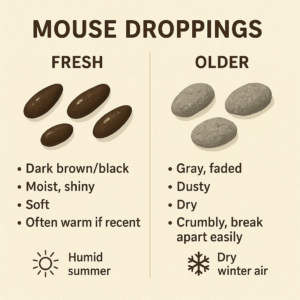
Fresh droppings
- Dark brown or black
- Moist, shiny, soft
- Often warm if very recent
Older droppings
- Gray, faded, or dusty
- Dry and crumbly
- Break apart easily
Understanding freshness helps determine whether an infestation is active or historic. In Ohio’s humid summers, droppings may stay moist a bit longer, while winter air dries them faster, but they always transition to a gray, brittle appearance over time.
In many homes we service in Centerville, Beavercreek, and Vandalia, homeowners notice a mix of old and fresh droppings. This usually means mice have been present for weeks or months, not days.
Mouse Droppings vs. Rat Droppings: How to Tell the Difference

Misidentifying droppings can lead to treating the wrong pest, and since rats and mice behave differently, this matters. Here’s the quick comparison:
| Feature | Mouse Droppings | Rat Droppings |
| Size | 1/8–1/4 inch | 1/2–3/4 inch |
| Shape | Pointed at both ends | Rounded or blunt, capsule-like |
| Texture | Smooth | Slightly rough or thicker |
| Quantity per day | 50–75 | 20–50 |
In older Dayton homes, especially in neighborhoods like Belmont or Five Oaks, Pest Control Dayton often finds both types, which suggests rats may be in basements while mice move freely through kitchens or attics.
If droppings are unusually large, always assume rats until inspected professionally. Rats are more destructive and can chew through wiring, HVAC components, and structural wood.
Common Places You’ll Find Mouse Droppings
Mice don’t roam randomly. They follow predictable patterns driven by food, water, and shelter. That’s why droppings tend to appear in consistent locations.
Here are the most common areas we find in Dayton homes:
1. Kitchens
- Behind stoves or refrigerators
- Inside lower cabinets and drawers
- Under the kitchen sink
- Near pet food bowls or open food storage
Since kitchens provide warmth and easy food access, they’re often the first room where droppings are found.
2. Basements & Attics
Many Dayton-area basements have clutter, old insulation, and storage boxes, perfect hiding spots for mice. Droppings often show up around:
- Water heaters
- Storage shelves
- Laundry areas
- Attic insulation and rafters
3. Garages
Mice often enter through garage door seals or wall gaps. Look near:
- Tool benches
- Storage bins
- Bags of bird seed or pet food
4. Entry Points
Droppings near baseboards, pipes, and small wall gaps are common signs of mouse highways.
5. Commercial Buildings
Restaurants, retail stores, and warehouses frequently find droppings:
- Under shelving
- In storage rooms
- Behind equipment
These areas are especially sensitive because mice can contaminate food or inventory quickly.
Health Risks Associated With Mouse Droppings
Mouse droppings aren’t just unsanitary, they can be dangerous. Some of the most serious risks include:
Hantavirus
Spread through urine, droppings, and nesting material. Inhaling dust from dried droppings is especially risky.
Salmonella
Mice often track bacteria onto food packaging and kitchen surfaces.
Leptospirosis
A bacterial disease that spreads easily in damp areas.
Allergies & Asthma
Droppings, dander, and urine can trigger respiratory reactions in children, seniors, and asthma sufferers.
In Centerville and Fairborn, we’ve treated homes where families experienced unexplained allergy symptoms, only to later discover hidden mouse droppings behind appliances.
Important:
Never sweep or vacuum dry droppings, as this sends contaminated dust into the air. Safe cleanup requires proper disinfecting, gloves, and ventilation.
What to Do If You Find Mouse Droppings
Finding droppings doesn’t mean you have to panic, but you should take action immediately. Here’s what Pest Control Dayton recommends:
1. Ventilate the Area
Open windows or turn on fans before cleaning.
2. Spray Droppings With Disinfectant
Use a bleach solution (1 cup bleach to 10 cups water) or an enzyme-based cleaner.
Let it sit for 5–10 minutes before removing anything.
3. Wear Gloves & Avoid Sweeping
Use paper towels to pick up droppings. Sweeping spreads airborne particles.
4. Seal All Food Sources
Move food into airtight containers, mice can chew through thin plastic and cardboard.
5. Inspect for Entry Points
Look for tiny holes or cracks around:
- Cabinets
- Appliances
- Exterior walls
- Plumbing lines
If a pencil can fit through a gap, a mouse can too.
6. Call a Professional
DIY traps only catch individual mice. They don’t address nesting, breeding, or entry points.
How to Prevent Mice From Coming Back
Mice are persistent and can re-enter if your prevention steps are incomplete. Here are long-term strategies that work in Dayton homes:
Seal Entry Points
Mice can squeeze through openings as small as a dime. Use steel wool, caulk, or metal flashing around:
- Vent gaps
- Foundation openings
- Dryer vents
- Basement windows
Store Food Securely
Airtight containers, pet food storage bins, and clean counters go a long way.
Reduce Clutter
Clutter gives mice hiding places. Keep basements, attics, and garages organized.
Fix Moisture Issues
Leaky pipes or damp basements attract rodents. A dehumidifier can help.
Maintain Your Yard
Overgrown bushes and untrimmed vegetation create shelter near entry points.
Keep Trash Sealed
Outdoor and indoor bins should have tight lids.
Small lifestyle adjustments add up to major pest prevention.
Frequently Asked Questions About Mouse Droppings
How many droppings mean I have an infestation?
Finding more than a handful, especially fresh droppings, suggests you have multiple mice.
Can mouse droppings make you sick?
Yes. Diseases can spread through direct contact or inhaled dust.
Are mouse droppings dangerous to pets?
Yes, especially if your pet sniffs or eats them.
Do mouse droppings smell?
Fresh droppings may smell slightly musky. Strong odors indicate active nests or urine.
How long do droppings stay infectious?
Droppings can remain hazardous for up to a week or longer, depending on humidity.
Do deer mice in Ohio have different droppings?
Only slightly. Deer mice droppings can be a bit lighter, but the pointed shape remains the same.
Ready to Get Rid of Mice? Contact Pest Control Dayton Today!
If you’ve spotted mouse droppings, you’re already seeing the most obvious evidence of rodent activity. The faster you act, the easier it is to stop damage, disease risks, and breeding.
Pest Control Dayton provides:
- Fast inspections
- Eco-friendly removal
- Rodent-proofing solutions
- Long-term prevention plans
- A 100% satisfaction guarantee
Visit Pest Control Dayton for a free quote, or contact us today.
Your home deserves to be safe, healthy, and pest-free, Pest Control Dayton can make it happen.