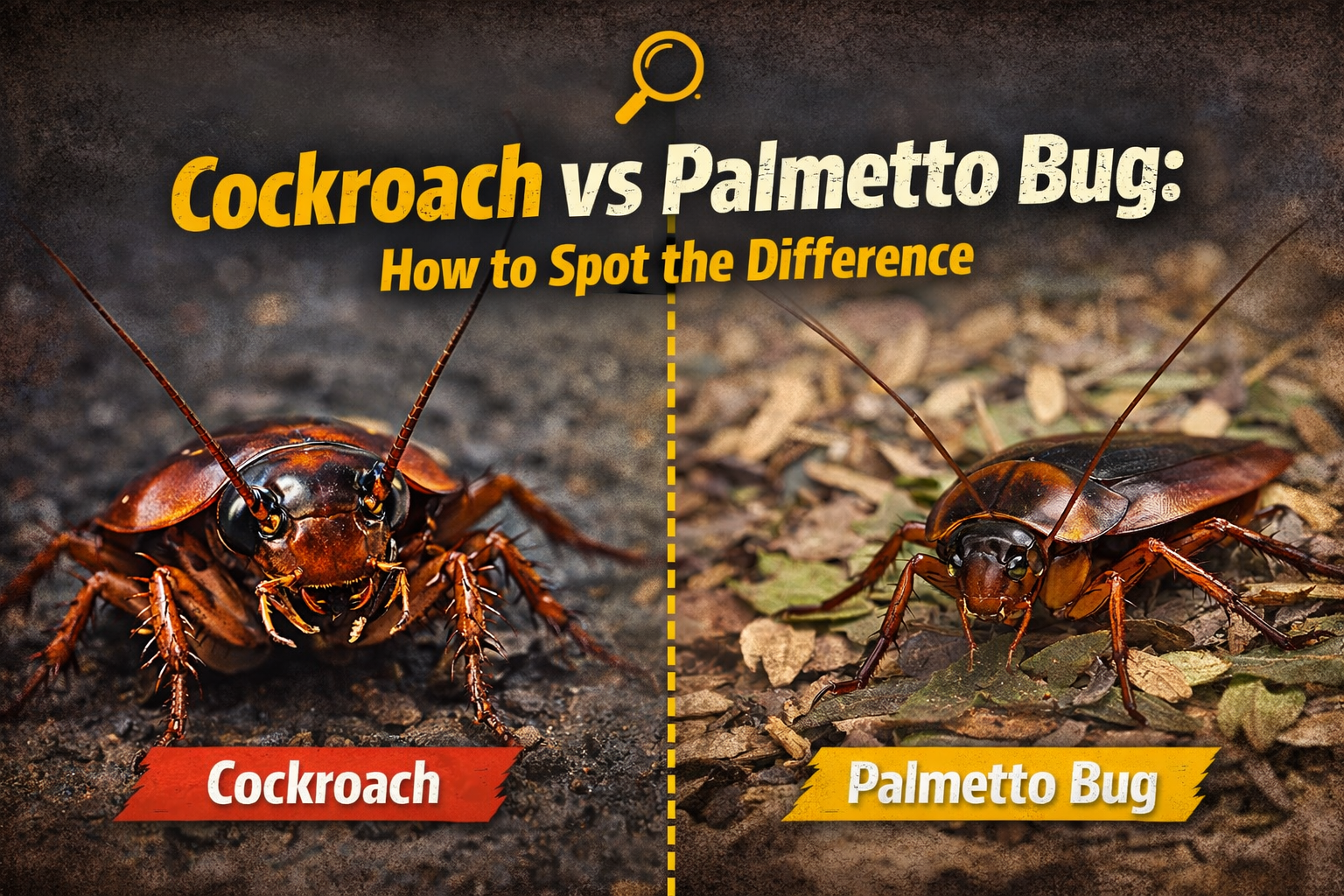
There’s a lot of confusion out there about palmetto bugs and cockroaches. Some people insist they’re completely different insects, while others claim “palmetto bug” is just a polite Southern term for a roach. So what’s the truth?
Here’s the straight answer: Palmetto bugs ARE cockroaches. The term “palmetto bug” is a regional nickname primarily used in the southeastern United States to describe certain large cockroach species, particularly the American cockroach and the smokybrown cockroach.
But understanding the differences between various cockroach species—and why some earn the “palmetto bug” label, can help homeowners identify what’s invading their space and deal with it effectively.
What Exactly Is a Palmetto Bug?
The term “palmetto bug” originated in the southeastern United States, where these insects are commonly found near palmetto trees and in warm, humid environments. While the name sounds more pleasant than “cockroach,” it doesn’t change what these pests actually are.
The Palmetto bug typically refers to:
- American cockroaches (most common)
- Smokybrown cockroaches
- Florida woods cockroaches
- Occasionally, Oriental cockroaches
These species share common traits: they’re larger than typical household roaches, can fly, and prefer outdoor environments, though they’ll readily invade homes when conditions are right.
Palmetto Bug vs Cockroach: Key Differences
While palmetto bugs are technically cockroaches, there are some practical differences between what people call “palmetto bugs” and the more common indoor roach species.
Size Palmetto bugs are noticeably larger. American cockroaches, the most common palmetto bug, can reach 1.5 to 2 inches in length, sometimes even longer. Compare that to German cockroaches, which max out at about half an inch.
Color Palmetto bugs tend to be reddish-brown to dark brown with a distinctive yellowish figure-eight pattern behind their head (in American cockroaches). German cockroaches are lighter tan or brown with two dark parallel stripes on their backs.
Habitat Preferences This is the big one. Palmetto bugs prefer outdoor environments—under mulch, in trees, around foundations, in sewers, and near water sources. They’re occasional invaders that wander indoors. German cockroaches, on the other hand, thrive indoors and establish permanent colonies inside homes, particularly in kitchens and bathrooms.
Flying Ability Palmetto bugs are strong fliers, especially in warm weather. They’re particularly active on humid summer evenings and might fly toward lights. Most indoor cockroach species have wings but rarely fly effectively.
Infestation Patterns Seeing one palmetto bug doesn’t necessarily mean there’s an infestation inside the home. These insects often wander in from outside. Spotting a German cockroach, however, almost always indicates a breeding population somewhere in the house.
How to Identify Different Cockroach Species
American Cockroach (The Classic Palmetto Bug)
- Length: 1.5 to 2+ inches
- Color: Reddish-brown with yellowish figure-eight pattern on head
- Wings: Long, extend beyond abdomen, strong flier
- Habitat: Prefers warm, damp areas; often found in basements, sewers, and crawl spaces
- Behavior: Occasional indoor invader from outdoor populations
German Cockroach
- Length: 0.5 to 0.6 inches
- Color: Light brown to tan with two dark parallel stripes behind head
- Wings: Has wings but rarely flies
- Habitat: Exclusively indoor; loves kitchens, bathrooms, and appliances
- Behavior: Forms large indoor colonies, reproduces rapidly
Smokybrown Cockroach
- Length: 1 to 1.5 inches
- Color: Shiny dark brown to mahogany (no markings)
- Wings: Uniform dark color, good flier
- Habitat: Tree holes, mulch, gutters, attics
- Behavior: Strongly attracted to lights, enters homes through small openings
Oriental Cockroach
- Length: 1 to 1.25 inches
- Color: Shiny dark brown to black
- Wings: Males have short wings; females have small wing pads
- Habitat: Cool, damp areas; basements, crawl spaces, drains
- Behavior: Cannot fly, slow-moving, often called “water bugs”
Florida Woods Cockroach
- Length: 1.5 inches
- Color: Very dark brown to black
- Wings: Short, cannot fly
- Habitat: Outdoor leaf litter, under bark, occasionally indoors
- Behavior: Releases foul-smelling spray when threatened
Why the Name “Palmetto Bug” Exists
Regional terminology plays a big role here. In the South, particularly in states like Florida, South Carolina, Georgia, and Louisiana, residents have long used “palmetto bug” instead of “cockroach.” There are a few theories why:
Social Stigma Let’s be honest, nobody wants to admit they have cockroaches. The term “cockroach” carries associations with filth and poor housekeeping. “Palmetto bug” sounds more like a quirky local wildlife issue than a pest problem.
Outdoor Association Since these larger roaches often come from outside rather than establishing indoor colonies, calling them palmetto bugs emphasizes their outdoor origins. It’s a way of saying, “This isn’t our fault—they just wander in from the palmetto trees.”
Historical Usage The term has been used for generations in the South, becoming part of regional vocabulary. Many Southerners genuinely grew up believing palmetto bugs and cockroaches were different species.
Are Palmetto Bugs Dangerous?
Whether called palmetto bugs or cockroaches, these insects pose similar health risks:
Disease Transmission Cockroaches crawl through sewers, garbage, and decaying matter, picking up harmful bacteria. They can contaminate food and surfaces with:
- Salmonella
- E. coli
- Staphylococcus
- Streptococcus
Allergens Cockroach droppings, saliva, and shed skins contain proteins that trigger allergic reactions and asthma, particularly in children. Studies show cockroach allergens are a leading cause of asthma in urban areas.
Psychological Impact Large flying cockroaches can be genuinely terrifying. The sudden appearance of a two-inch roach flying through the living room causes understandable distress for most people.
How to Keep Palmetto Bugs Out of Your Home
Since palmetto bugs typically live outdoors, prevention focuses on blocking entry and reducing attractants:
Seal Entry Points
- Install door sweeps on all exterior doors
- Seal cracks around windows, pipes, and utility lines
- Repair damaged screens
- Caulk gaps in foundations and siding
- Cover vents with fine mesh screens
Eliminate Outdoor Attractions
- Keep mulch at least 12 inches away from the foundation
- Remove leaf litter and debris near the house
- Fix leaky outdoor faucets and eliminate standing water
- Trim trees and shrubs away from the house
- Store firewood away from the home
Indoor Prevention
- Fix leaky pipes and eliminate moisture problems
- Keep the house clean, especially kitchens
- Store food in sealed containers
- Take out garbage regularly
- Don’t leave pet food out overnight
Outdoor Lighting Palmetto bugs are attracted to lights. Use yellow “bug lights” for outdoor fixtures, or position lights away from doors so insects gather away from entry points.
When to Call Professional Pest Control
Seeing an occasional palmetto bug outdoors or one that wandered inside doesn’t necessarily require professional intervention. A few simple prevention measures might be all that’s needed.
However, professional pest service help becomes essential when:
- Multiple palmetto bugs are appearing indoors regularly
- Roaches are found in kitchens, bathrooms, or food storage areas
- There’s evidence of nesting or egg cases (oothecae)
- German cockroaches or other indoor species are present
- DIY treatments haven’t solved the problem
- There are vulnerable family members with asthma or allergies
Frequently Asked Questions
What is the difference between a palmetto bug and a cockroach?
There’s no difference, palmetto bugs ARE cockroaches. “Palmetto bug” is a regional nickname used primarily in the southeastern United States for large cockroach species like the American cockroach.
Are palmetto bugs and American cockroaches the same?
Yes, the term “palmetto bug” most commonly refers to American cockroaches, though it’s sometimes used for other large outdoor cockroach species like smokybrown cockroaches.
Do palmetto bugs infest homes like regular cockroaches?
Palmetto bugs prefer outdoor environments and usually enter homes by accident or when seeking shelter. Unlike German cockroaches, they don’t typically establish large breeding colonies indoors, though they can if conditions are right.
Can palmetto bugs fly?
Yes, palmetto bugs are strong fliers, particularly in warm weather. This is one characteristic that distinguishes them from smaller indoor cockroach species that rarely fly.
Why are they called palmetto bugs?
The name comes from the southeastern United States, where these large cockroaches are commonly found near palmetto trees. The term is partly regional preference and partly a way to avoid the stigma associated with “cockroach.”
Are palmetto bugs worse than cockroaches?
Neither is “worse”, they’re the same insect with different names. However, indoor-dwelling species like German cockroaches tend to cause more problems because they establish permanent colonies and reproduce rapidly indoors.
What attracts palmetto bugs to your house?
Moisture, food sources, shelter, and lights attract palmetto bugs. They’re particularly drawn to damp areas, outdoor lights at night, and homes with gaps or cracks that provide easy entry.
The Bottom Line: It’s Still a Roach
Call them palmetto bugs, water bugs, or Croton bugs; they’re all cockroaches, and they all pose potential health risks. The name doesn’t change what needs to be done: keep them out of the home and eliminate any that get inside.
Understanding the difference between outdoor-dwelling palmetto bugs and indoor-breeding cockroach species helps determine the best approach to pest control. Occasional palmetto bug sightings might only require better sealing and outdoor management. Finding German cockroaches, however, signals a serious infestation that needs immediate professional attention.
The good news? With the right approach, any cockroach problem can be solved.
Expert Cockroach Control in Dayton
Whether dealing with palmetto bugs, German cockroaches, or any other species, professional pest control makes all the difference. At Pest Control Dayton, the team has extensive experience identifying cockroach species and implementing targeted solutions that actually work. alongside expert handling of bed bugs, rodents, and termites.
The approach goes beyond just spraying pesticides. Technicians conduct thorough inspections to identify entry points, harborage areas, and conditions that attract roaches. Then they develop customized treatment plans that eliminate current infestations and prevent future problems.
Don’t let cockroaches, whatever name they go by, compromise your family’s health and peace of mind.
Contact Pest Control Dayton today for a comprehensive inspection and effective cockroach control. Visit Pest Control Dayton or call now to schedule your appointment and get back to a pest-free home.
Because at the end of the day, a roach by any other name is still a roach, and it doesn’t belong in your house.