
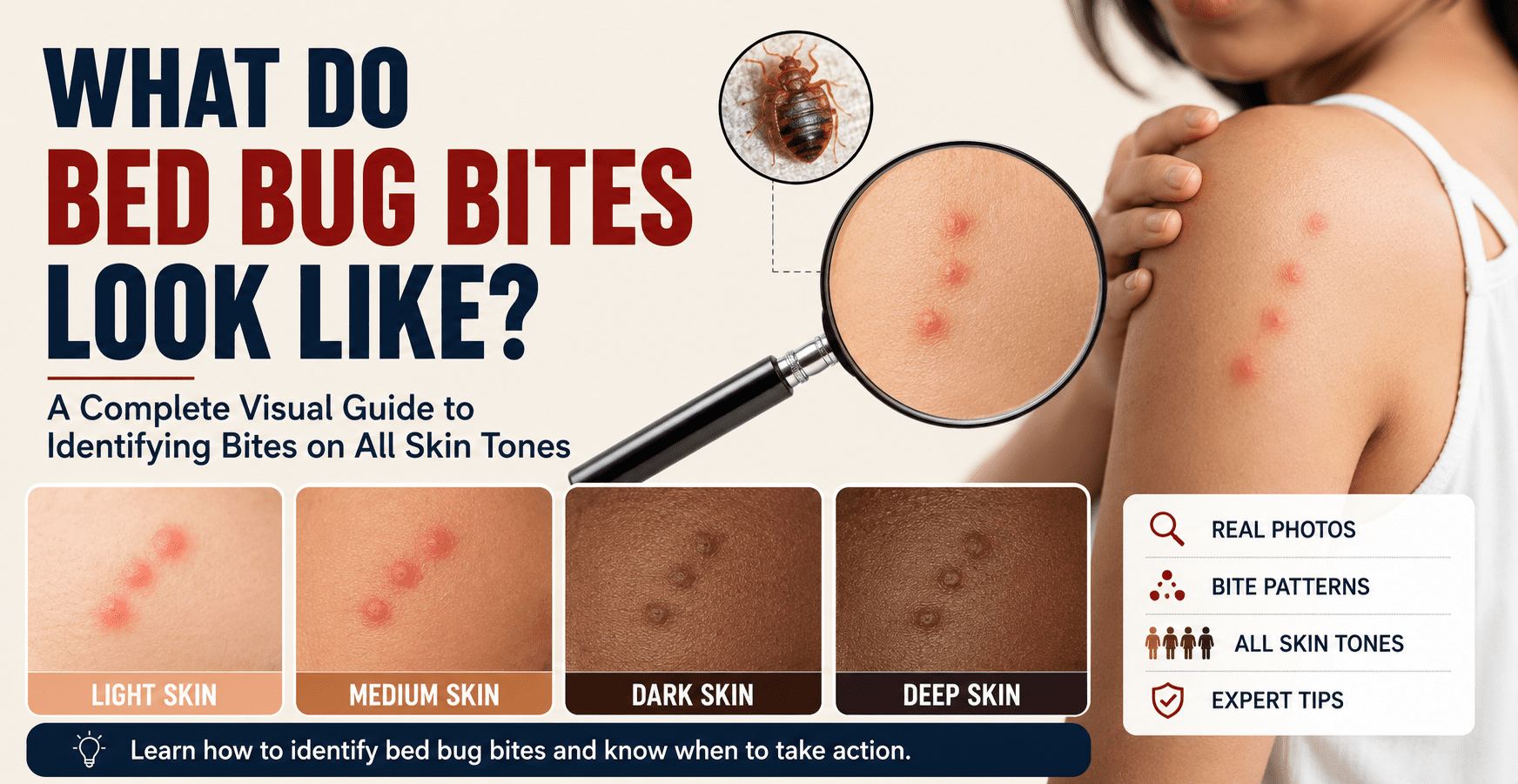
Woke up with mysterious red marks on your arms or neck this morning? You’re not alone. Bed bug bites are one of the most misidentified skin reactions out there, and most people spend days guessing before they get to the real answer. As a pest control professional serving the Dayton, Ohio area, I’ve seen how confusing and stressful this situation can be.
This guide is going to walk you through exactly what bed bug bites look like, how they compare to other bug bites, what they look like on different skin tones, and most importantly, what you should do next.
Let’s clear this up once and for all.
What Do Bed Bug Bites Look Like? The Basics
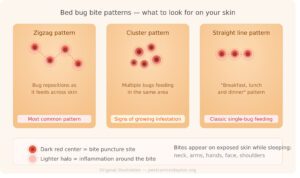
Bed bug bites typically appear as small, raised, red welts on the skin. They’re usually flat or slightly puffy, about the size of a mosquito bite or slightly smaller, roughly 2 to 5 millimeters across. Each bite may have a darker red center where the bug actually pierced the skin, surrounded by a lighter red, inflamed halo.
Here’s what makes bed bug bites visually distinct compared to most other insect bites: the pattern.
Bed bugs don’t just bite once and move on. They feed, get disturbed, reposition, and bite again. This creates their signature pattern, which looks like:
- A straight line of 3 or more bites (sometimes called “breakfast, lunch, and dinner”)
- A zigzag or curved line of welts
- A tight cluster of bites grouped together in one area
- Occasionally, what looks like a small constellation of marks
If you see a single random bite, it’s probably not a bed bug. If you see a neat row of welts that showed up overnight, that’s a major red flag.
Where Do Bed Bug Bites Appear on the Body?
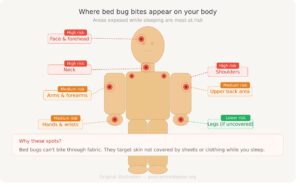
Bed bugs can’t bite through fabric, but they are clever about finding exposed skin while you sleep. The most common locations for bed bug bites include:
- Neck and shoulders
- Arms and forearms
- Hands and wrists
- Face and forehead
- Legs and ankles (if you sleep without covers)
- The upper back
If you wear loose pajamas, bed bugs can crawl underneath the fabric and bite areas that aren’t technically “exposed.” Many people are surprised to find bites along their torso or lower back for this reason.
Unlike flea bites, which cluster around the ankles and lower legs, bed bug bites appear mostly on your upper body because that’s what’s sticking out of the blanket while you sleep.
What Bed Bug Bites Look Like on Different Skin Tones
This is one of the most important things to understand, and one that a lot of online articles completely skip over.
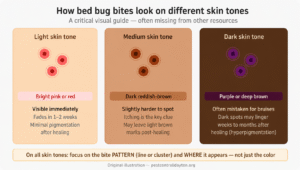
On lighter skin tones, bed bug bites are typically bright pink or red, with visible inflammation and swelling. They tend to be easy to spot against the skin and may look similar to a mosquito bite or small hive.
On medium skin tones, bites often appear as darker pink or reddish-brown marks. The inflammation may be slightly less dramatic in appearance, but the raised bump and itching are the same.
On darker or Black skin tones, bed bug bites frequently appear as dark purple, brown, or deep burgundy marks rather than the red most people picture. The redness is masked by melanin in the skin, making individual bites harder to see at first glance. Additionally, darker skin tones are far more prone to post-inflammatory hyperpigmentation, meaning the bite mark may leave behind a dark spot that lingers for weeks or even months after the bite itself has healed.
This distinction matters because many people with darker skin tones are told their bites look like “heat bumps” or “allergic rashes” when in reality they are dealing with an active bed bug infestation. Don’t let the color fool you. Focus on the pattern and the location.
The Day-by-Day Timeline of a Bed Bug Bite

Here’s something most competitors don’t tell you: bed bug bites don’t always show up right away. Your body’s reaction to the saliva bed bugs inject is what causes the visible bite, not the puncture itself.
Days 0 to 2: Many people feel nothing at all. The bite may appear as a faint pinkish mark or nothing visible yet. The bug has injected an anesthetic and anticoagulant into your skin, which numbs the area and prevents blood from clotting while it feeds.
Days 3 to 5: The immune response kicks in. The bite becomes raised, red, and noticeably itchy. This is when most people first realize something bit them.
Days 5 to 10: Peak itching and inflammation. The welts are at their most visible and most uncomfortable. Scratching at this stage increases your risk of a secondary skin infection.
Days 10 to 14: Gradual improvement. Redness fades, the bump flattens, and itching decreases.
After 2 weeks: For most people, the bite is nearly gone. However, on darker skin tones, hyperpigmented spots can linger for several additional weeks.
In some cases, bites can take up to 14 days to first appear on the skin, which is part of what makes them so tricky to connect to a specific night or location.
Here’s a Fact Most Articles Don’t Tell You
Approximately 30% of people show absolutely no visible reaction to bed bug bites at all.
That means nearly one in three people could have a full-blown bed bug infestation in their home and never see a single bite mark on their body. This is especially common in older adults and people who have never been exposed to bed bugs before. If your partner wakes up covered in welts but you have nothing, you could still have bed bugs. The bugs may be biting both of you, but only one of you is reacting.
This is why it’s critical to look for other signs of an infestation beyond just bites on your skin.
Bed Bug Bites vs. Other Bug Bites: A Clear Comparison
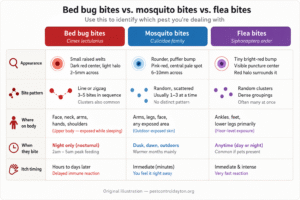
This is where people get the most confused. Here’s a straightforward breakdown:
Bed Bug Bites vs. Mosquito Bites
Mosquito bites appear randomly on exposed skin wherever the mosquito happened to land. They’re usually isolated, one or two at a time, and show up almost immediately after being bitten. Bed bug bites appear in patterns, show up after sleeping, and may take hours or days to become visible.
Bed Bug Bites vs. Flea Bites
Flea bites are almost always around the ankles, feet, and lower legs. They itch immediately and intensely, with a noticeable central puncture point and bright red halo. Bed bug bites tend to be on the upper body, may have a darker center rather than a clear puncture, and itch more gradually.
Bed Bug Bites vs. Spider Bites
Spiders typically bite only once. A spider bite is usually a single, isolated mark, sometimes with two puncture points visible. Bed bug bites are always multiple and almost always in a pattern.
Bed Bug Bites vs. Hives
Hives are an allergic reaction and tend to appear and disappear quickly, often within hours. They can move around the body and vary in size dramatically. Bed bug bites stay in a fixed location, don’t move, and persist for days to weeks in the same spot.
Also Read: Bed Bug Bites vs Mosquito Bites: A Visual Comparison
Can Bed Bugs Bite Your Pets?
Yes, and this is another topic most pest control articles ignore.
While bed bugs strongly prefer human blood, they will absolutely bite dogs and cats when human hosts aren’t available or easily accessible. You might notice your pet scratching and restless at night, red marks appearing in clusters on their skin, or unusual irritability during nighttime hours.
Bed bugs don’t live on your pets the way fleas do, but they will use your pet’s bedding as a hiding spot and bite your pet when they sleep there. If you notice your pet acting uncomfortable at night and you can’t find a flea, it’s worth checking their sleeping area for signs of bed bugs.
The Signs Beyond the Bites: What to Look For in Your Bedroom
Because bites alone are unreliable, you need to look for corroborating evidence. Here’s what to check:
Blood spots on your sheets. Small rusty or reddish stains on your mattress or pillow case. These happen when a fed bug is crushed while you roll over in your sleep.
Dark fecal spots. Tiny black or dark brown specks about the size of a pen point on your mattress seams, box spring, or headboard. This is bed bug excrement.
Shed skins. Bed bugs molt several times as they grow. You might find pale, translucent husks near seams of your mattress.
Live bugs. Adult bed bugs are the size of an apple seed, flat, oval, and reddish-brown. After feeding, they become rounder and darker. Check mattress seams, inside box springs, behind headboards, inside dresser drawers, and behind electrical outlet covers.
A sweet, musty odor. Heavy infestations sometimes produce a faint, sweet, unpleasant scent that’s often described as smelling like coriander or overripe berries.
The Psychological Impact Nobody Talks About
This one gets left out of almost every article online, but it’s very real.
Bed bug infestations cause significant psychological distress. Many people develop insomnia, anxiety, and heightened stress about sleeping in their own bed. Some people become hypervigilant about checking their skin every morning, which interferes with their daily life. There’s also an unfair social stigma around bed bugs, with many people incorrectly associating them with poor hygiene or dirty homes.
Bed bugs do not discriminate. They’ve been found in five-star hotels, clean apartments, and well-kept suburban homes all over the United States, including right here in the Dayton area. If you’re dealing with this, please know it is not a reflection on your cleanliness or your character.
How to Treat Bed Bug Bites at Home
While you’re working on addressing the actual infestation, here’s how to manage the bites themselves:
- Wash the bite area gently with mild soap and cool water
- Apply an over-the-counter hydrocortisone cream to reduce itching and inflammation
- Use calamine lotion for additional itch relief
- Take an oral antihistamine like Benadryl if itching is severe
- Apply a cold compress for 10 minutes at a time to reduce swelling
- Avoid scratching at all costs, as this can lead to a bacterial skin infection like impetigo or cellulitis
See a doctor if your bites are blistering, oozing, or show signs of infection, if you develop hives or trouble breathing (which could indicate anaphylaxis), or if bites are not improving after two weeks.
Also Read: Can Cockroaches Bite Humans? Facts You Should Know
Frequently Asked Questions
How do I know for sure if what I have is bed bug bites?
Bites alone cannot definitively confirm a bed bug infestation. You need to find physical evidence of the bugs themselves, including live bugs, shed skins, fecal spots, or blood stains on bedding. If you can’t find evidence but suspect an infestation, a professional inspection is your best option.
Can bed bug bites appear days after staying somewhere?
Yes. Because some people have delayed immune responses, bites may not become visible until 7 to 14 days after the actual bite occurred. This is why people sometimes return from a hotel trip and develop bites a week later at home.
Do bed bug bites always itch?
Not always. Some people have mild or no itching reaction, while others experience intense itching. Individual sensitivity varies significantly.
Can I get bed bug bites through my clothes?
Bed bugs cannot bite through fabric. However, they can crawl under loose clothing to find exposed skin, so bites beneath clothing are still possible.
Are bed bug bites dangerous?
For most healthy adults, bed bug bites are a nuisance rather than a medical emergency. However, severe allergic reactions, secondary infections from scratching, and in rare long-term infestations, mild anemia have been reported. The psychological effects of sleep disruption and anxiety should also not be underestimated.
How do I keep bed bugs from coming back after treatment?
Use mattress and box spring encasements, reduce clutter where bugs can hide, inspect second-hand furniture thoroughly before bringing it indoors, and be careful with luggage after travel. Wash and dry all bedding on the highest heat setting regularly.
Stop Guessing. Get a Professional Inspection.
If you’ve woken up with mystery bites, found suspicious marks on your skin, or spotted any of the warning signs mentioned in this guide, don’t wait and hope it goes away on its own. Bed bug infestations do not resolve themselves. They grow.
The team at pest control Dayton has helped countless homeowners and renters across the Dayton area identify and eliminate bed bug infestations quickly and discreetly. We know how stressful this situation is, and we treat every home with the same care and respect we’d give our own.
Whether you need a professional inspection to confirm what you’re dealing with, or you already know you have bed bugs and need them gone for good, we’re here to help.
Call Pest Control Dayton today to schedule your inspection. You deserve to sleep comfortably in your own home again.